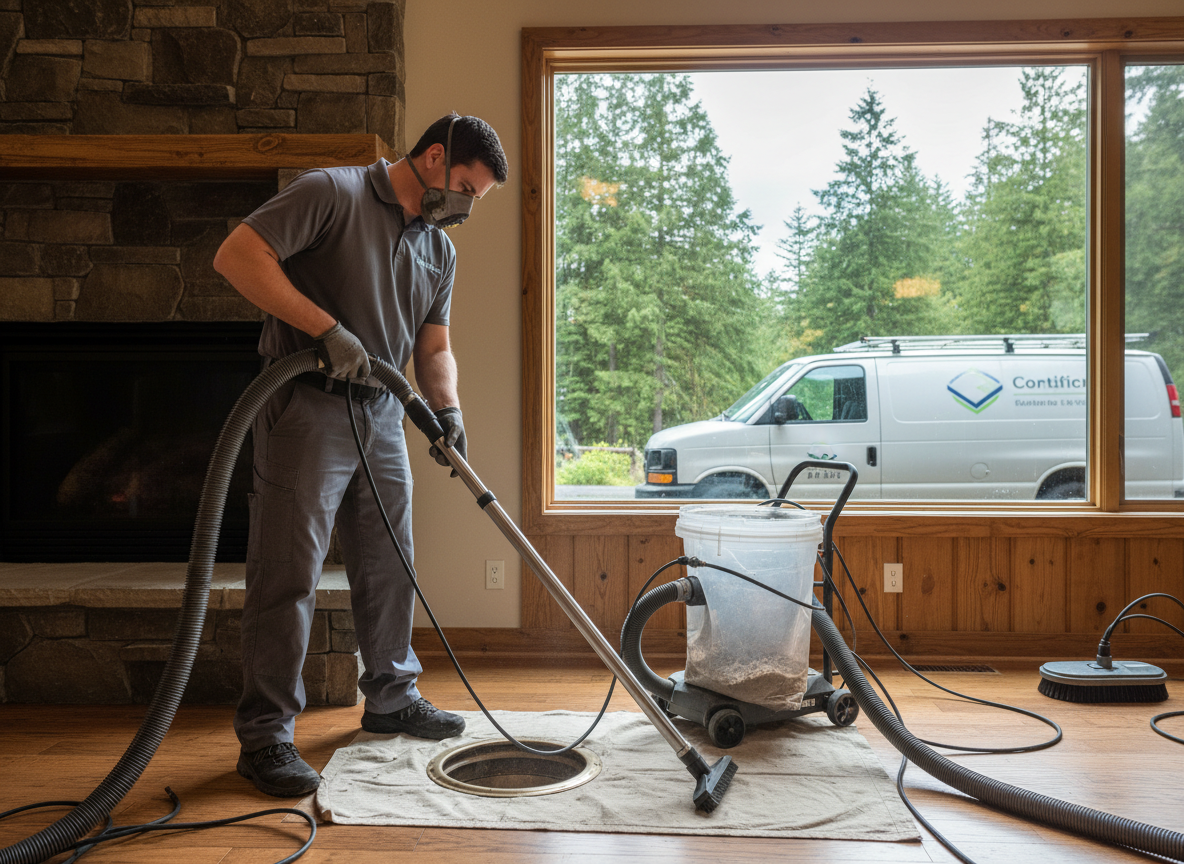
Lake Oswego homes often feature older ductwork from mid-century builds that trap fine dust and pollen carried in by the region's frequent rain and wind. Moisture from winter storms can promote mold growth inside metal and flex ducts, especially where insulation has settled or joints have loosened over decades. Homeowners notice reduced airflow and musty odors when furnaces cycle during the cool months. Cleaning restores circulation without disturbing attic insulation or disturbing crawl space conditions common in the area.
Technicians start by mapping the full trunk and branch layout to locate hidden blockages behind walls or in finished basements typical of Lake Oswego properties. Negative-pressure equipment pulls debris through the return side while brushes agitate interior surfaces, preventing particles from escaping into living spaces. Special attention goes to dryer vent connections and bathroom exhaust ties that frequently accumulate lint and condensation in the damp Oregon climate. Final inspection confirms no residual material remains before registers are reinstalled.
Edge cases include homes with rigid metal ducts that have developed corrosion from years of roof leaks or poor attic ventilation. In these situations crews use gentler agitation tools to avoid puncturing weakened sections. Pet dander and construction dust from nearby remodels in the 97035 zip code also require extra filter changes during the job. All work stays within the existing system footprint, leaving no new openings or exposed insulation.
Technician insight
In Oregon, the thing that catches most people out with Residential Air Duct Cleaning is how quickly winter rain drives moisture into older Lake Oswego duct joints that sit in unconditioned attics, turning light dust into stubborn mold that standard brushes miss unless crews open and dry the lines first.
Hidden Moisture in a 1970s Split-Level
A Lake Oswego homeowner reported weak airflow and a persistent earthy smell after heavy rains. Inspection found standing water in a low trunk line beneath the main floor. Crews isolated the section, extracted the water, cleaned the affected ducts, and restored full airflow without opening walls.
How it works
- 1
Initial System Inspection
Map every accessible duct run and note moisture stains or loose connections in Lake Oswego homes.
- 2
Negative Pressure Setup
Attach vacuum equipment to the main trunk and seal registers to contain debris during cleaning.
- 3
Agitation and Extraction
Run rotating brushes and air whips through each branch while the vacuum pulls loosened material out.
- 4
Final Verification
Check airflow at each register and confirm no visible residue remains before restoring the system.
Pricing
Cost depends on number of runs, access difficulty, and any moisture remediation needs; upfront quotes provided after inspection.