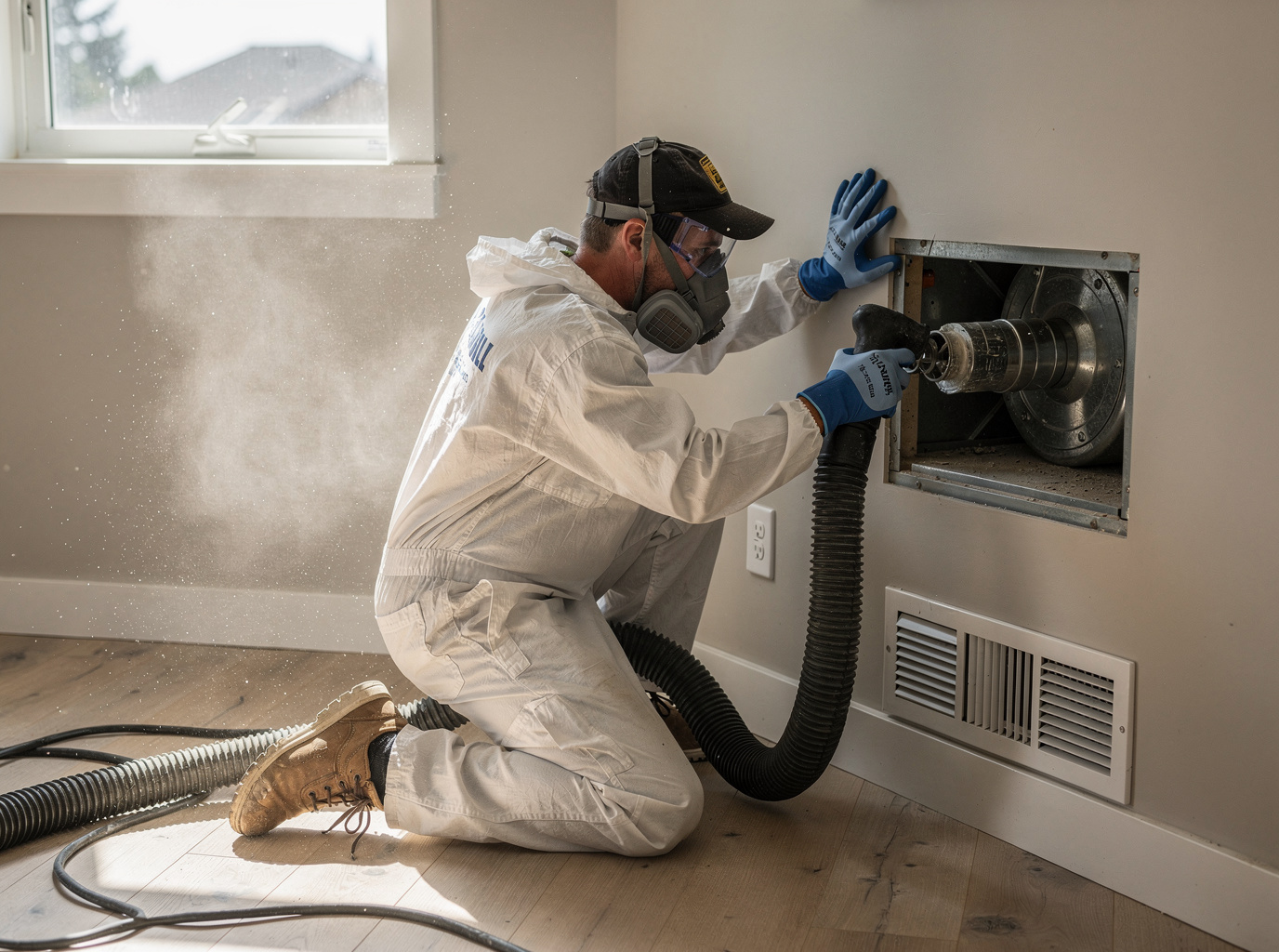
Lake Oswego homes often feature older duct systems routed through crawl spaces and attics where Clackamas County’s frequent winter rains drive moisture into metal and flex lines. When sudden odors or restricted airflow appear, technicians must first isolate the affected trunk runs before any negative-air equipment is attached, preventing cross-contamination to living areas. Emergency calls frequently involve pet dander or construction dust that has settled during the dry summer months and then gets mobilized by the first heavy storms.
Because the address sits at 5200 Meadows Rd, crews can reach most Lake Oswego neighborhoods within thirty minutes even at night. On arrival the priority is confirming whether the issue stems from a collapsed section, water intrusion, or a blocked return near the furnace. Technicians use inspection cameras to map the exact location before any brushing or vacuuming begins, avoiding unnecessary wall or ceiling cuts in finished basements common in the area.
Once the blockage or contamination source is removed, the system is retested under normal blower operation to verify static pressure has returned to acceptable levels. Homeowners are shown the before-and-after camera footage so they can see the material extracted from the ducts. Follow-up visits are scheduled only when residual moisture from the region’s persistent fog requires additional drying time.
Technician insight
In Oregon the thing that catches most people out with Emergency Air Duct Cleaning is how quickly rainwater finds its way into crawl-space ducts in Lake Oswego homes built on sloped lots; once moisture reaches the flex line, mold colonies form within days and the smell travels through the entire house the moment the furnace kicks on.
Musty Odor After November Rains
Homeowners in Lake Oswego noticed a persistent smell after several days of heavy rain. Inspection revealed water had entered a low return duct routed beneath the garage slab. The crew isolated the section, extracted standing water, brushed and vacuumed the line, then confirmed airflow returned to normal without further moisture.
How it works
- 1
Call Intake
Dispatcher logs the symptom and arrival window while confirming the Lake Oswego address.
- 2
On-Site Assessment
Technician inspects the furnace, returns, and accessible trunk lines with a camera to locate the obstruction or moisture source.
- 3
Isolation and Containment
Affected sections are sealed and negative-air machines positioned to prevent spread into living spaces.
- 4
Cleaning and Extraction
Brushes and HEPA vacuums remove debris; any standing water is extracted and the area dried.
- 5
Verification
System is restarted and airflow rechecked before departure.
Pricing
Emergency rates apply outside standard daytime hours and scale with the number of trunk lines requiring access.