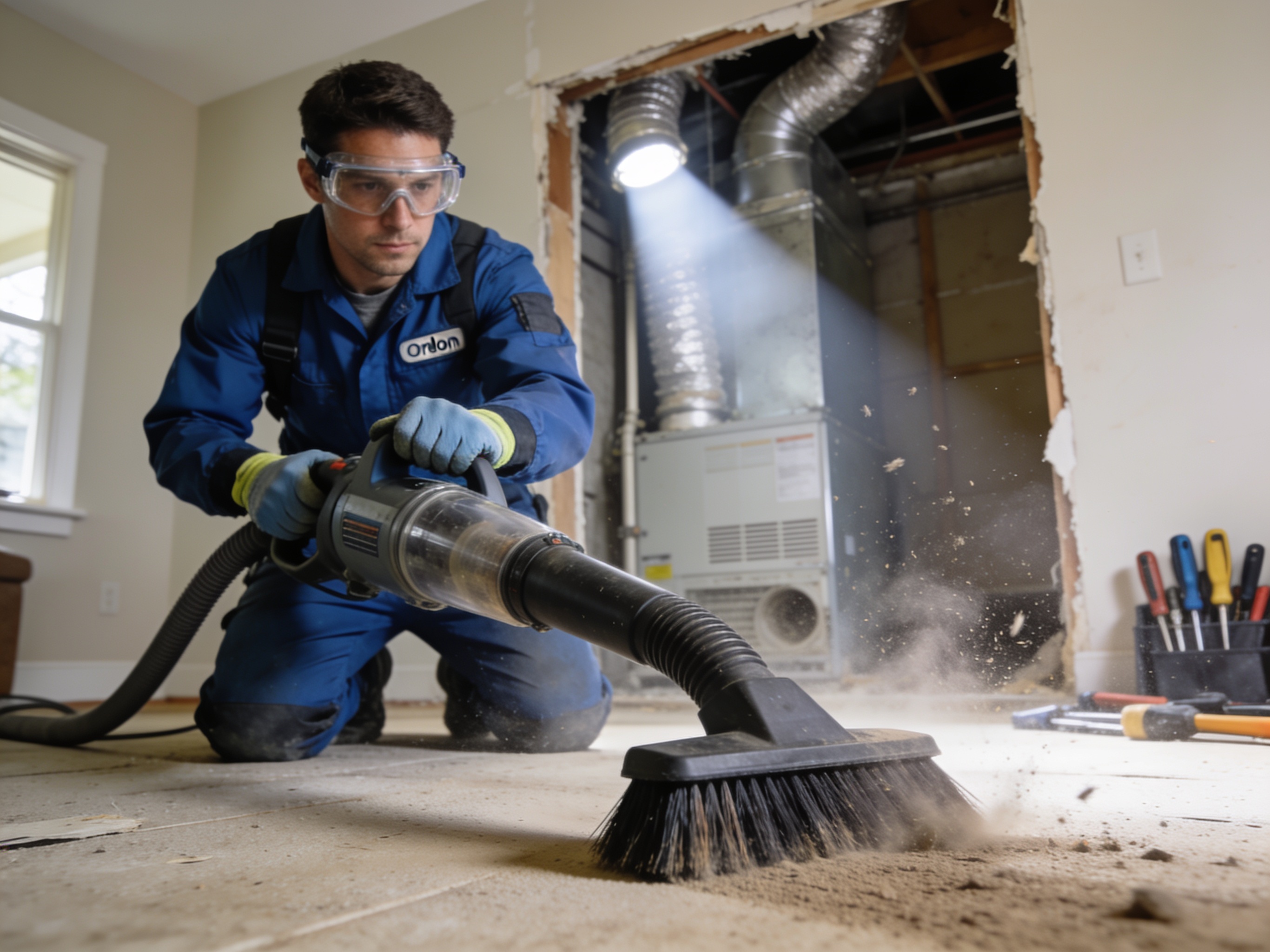
Oregon's wet climate around Lake Oswego drives moisture into duct systems, especially in homes built during the 1960s through 1980s expansions common in Clackamas County. Older sheet-metal runs often develop condensation points where warm indoor air meets cooler exterior walls, leading to hidden mold colonies that standard filters miss. Technicians working 24/7 must account for these conditions by using negative-pressure equipment that isolates sections without disturbing settled debris into living spaces.
Lake Oswego's hilly terrain and variable soil moisture create access challenges for ductwork routed through crawl spaces or attics. Heavy winter rains raise groundwater levels, increasing the risk of water intrusion at exterior vents and forcing crews to inspect for corrosion along trunk lines before any cleaning begins. Homes near the lakefront or in the Palisades neighborhood frequently show accelerated wear on flexible duct connections due to repeated expansion from temperature swings.
Emergency calls often involve pet dander and pollen buildup accelerated by open windows during the region's mild shoulder seasons. Crews carry portable HEPA filtration units sized for single-story ranch homes typical in the area, ensuring containment while working through supply and return runs that may span multiple additions added over decades. Proper sealing of registers prevents cross-contamination between finished and unfinished spaces during overnight service.
Technician insight
In Oregon, the thing that catches most people out with 24/7 Air Duct Cleaning is how quickly lake-effect humidity in Lake Oswego condenses inside older trunk lines during shoulder seasons, turning routine pollen removal into a mold remediation job if crews skip a full moisture check before starting.
Overnight Call After Heavy Rain
A Lake Oswego homeowner noticed musty air following several days of rain. Inspection revealed standing moisture in a low crawl-space run serving a 1978 split-level. Crew isolated the section, extracted water and debris overnight, then dried the line before restoring full system operation by morning.
How it works
- 1
Initial Assessment
Technician arrives at the Lake Oswego address, inspects accessible ducts, and identifies moisture or debris patterns common to Oregon housing.
- 2
Containment Setup
Negative air machines and sealed barriers are placed to protect living areas while isolating sections of the system.
- 3
Agitation and Extraction
Rotary brushes and compressed air dislodge buildup, with vacuum extraction removing material without recirculation.
- 4
Final Inspection and Report
Before-and-after checks confirm clearance, followed by homeowner walkthrough and notes on any Oregon-specific moisture concerns.
Pricing
Pricing varies by home size, duct accessibility, and extent of debris or moisture; call for an upfront assessment.