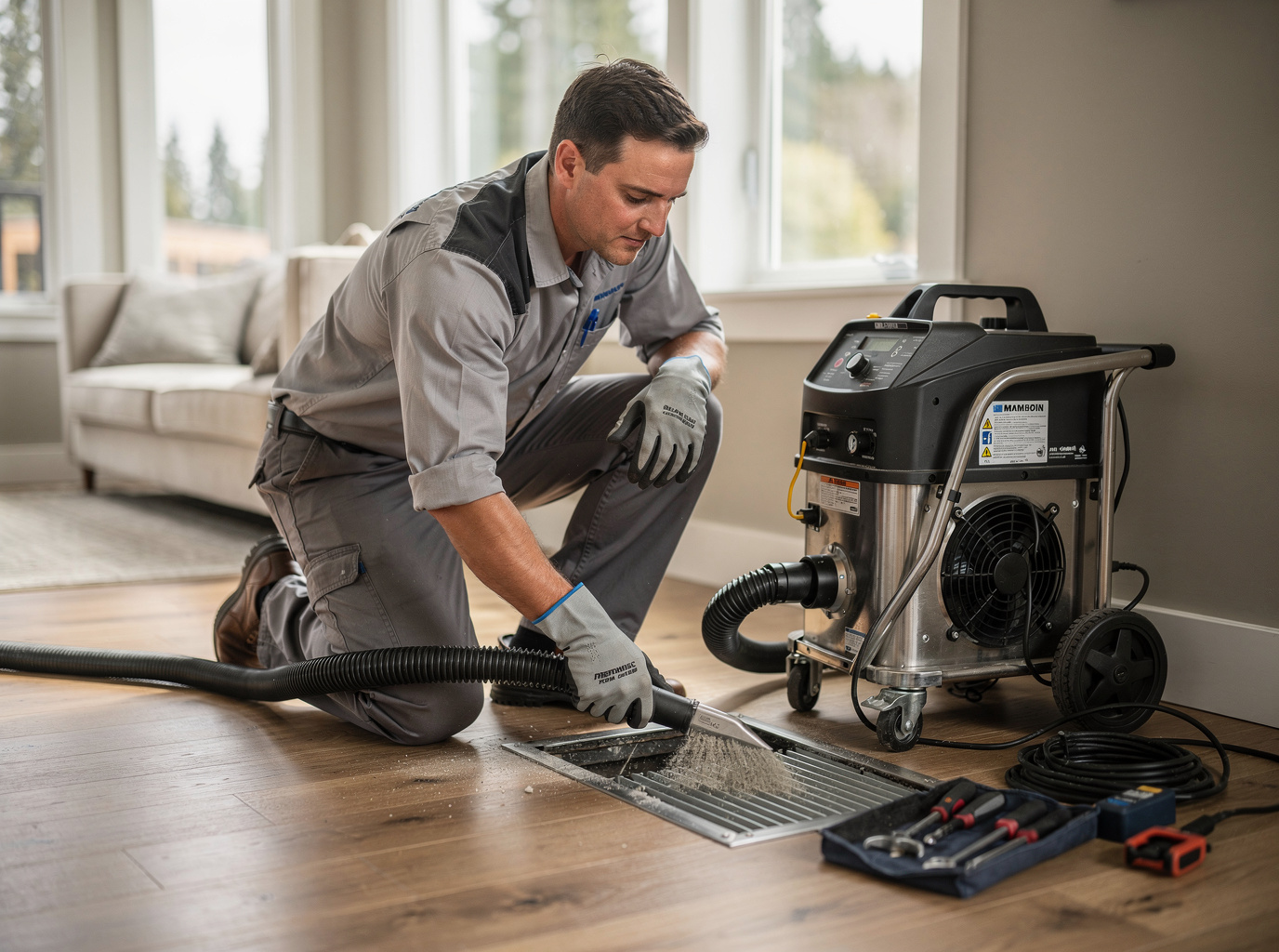
Lake Oswego homes often feature older ductwork installed decades ago in split-level and ranch-style houses common to the area. Rainy Oregon winters drive humidity into unsealed systems, allowing dust, pollen, and occasional mold to collect along metal runs that run through crawl spaces and attics. Technicians must account for these moisture patterns when planning access points so negative-pressure equipment pulls debris without spreading it into living spaces.
Nearby communities such as West Linn and Tigard share similar terrain with gentle slopes that can create low spots where condensation pools inside ducts. Standard residential trunk lines here frequently connect to multiple returns per floor, requiring full trunk and branch cleaning rather than quick register-only service. Skipping the main lines leaves behind the bulk of accumulated material that affects whole-house airflow.
Oregon building practices from the 1970s onward often placed ducts in unconditioned spaces without modern insulation wraps. This setup lets temperature swings pull additional particulates into the system during shoulder seasons. A proper job includes inspecting every accessible section for loose insulation or gaps that could reintroduce contaminants after cleaning.
Service calls in the Lake Oswego area routinely reveal pet hair and fine silt tracked in from nearby trails and parks that settles deep in the ductwork. Addressing these local conditions means using brushes sized for both round and rectangular metal ducts rather than one-size-fits-all tools.
Technician insight
In Oregon, the thing that catches most people out with Air Duct Cleaning near me is how our constant winter rain pushes moisture into crawl-space ducts in older Lake Oswego homes, creating hidden mold that standard dry cleaning misses unless you open and inspect every low spot.
West Linn Split-Level Duct Job
Residents reported musty smells after heavy rains. Inspection showed standing condensation in two low trunk lines running under the addition. We opened access panels, extracted the damp debris, and dried the sections before sealing. Airflow improved and the odor disappeared.
How it works
- 1
Site Assessment
Technician inspects all accessible ducts, returns, and the furnace or air handler to map the system layout and note moisture or debris patterns typical in Oregon homes.
- 2
Equipment Setup
Negative-pressure vacuum and agitation tools are positioned at the 5200 Meadows Rd service vehicle and connected to the home's system to contain particles during cleaning.
- 3
Mechanical Cleaning
Rotating brushes and compressed air move through each trunk and branch line, loosening buildup while the vacuum captures material before it re-enters living areas.
- 4
Final Inspection and Reassembly
All sections are checked for remaining debris, registers are reinstalled, and the system is tested for proper airflow before departure.
Pricing
Cost depends on home size, number of returns, and duct condition. Upfront quotes are provided after inspection.