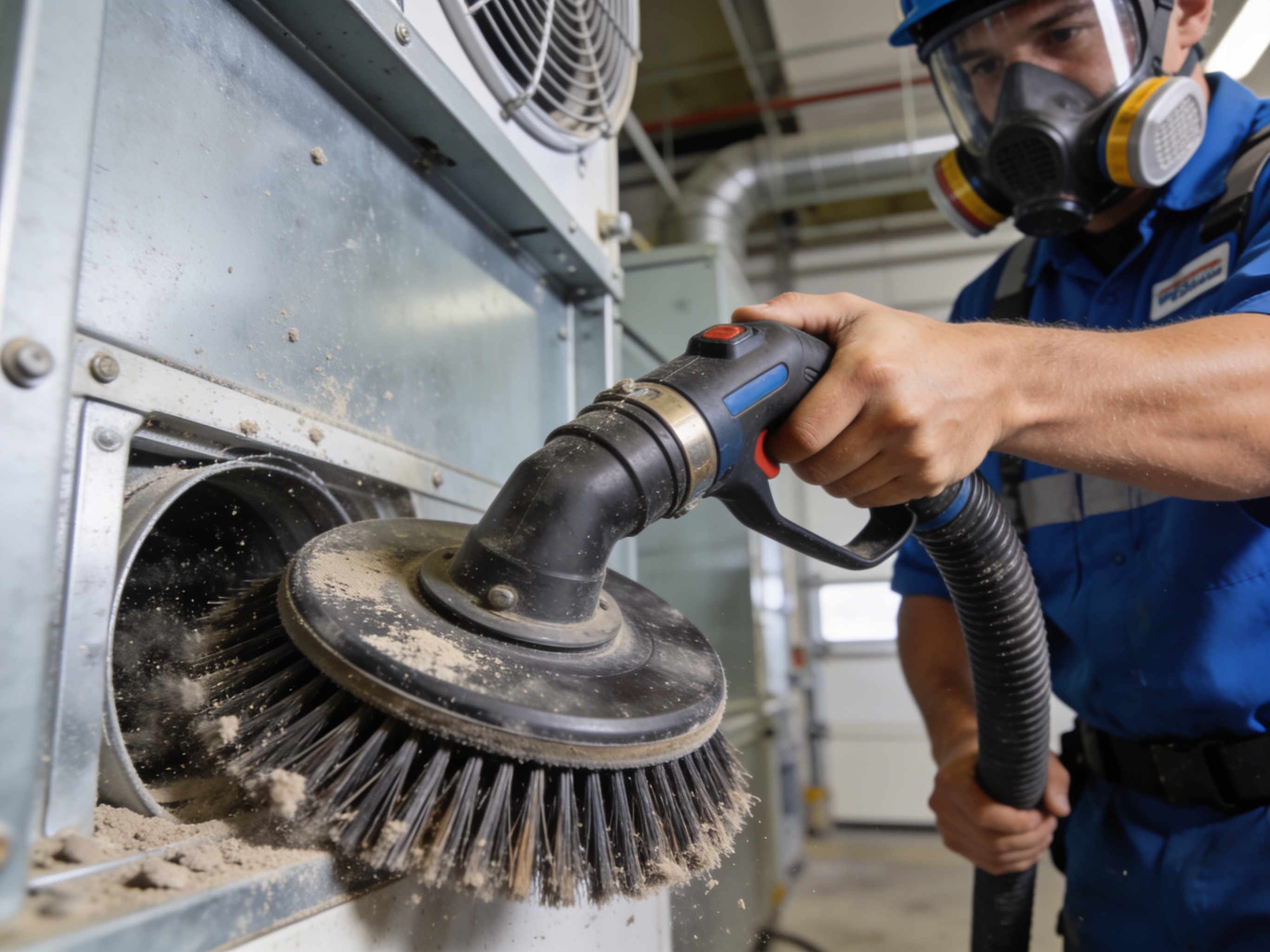
Commercial properties in Lake Oswego often feature older HVAC systems installed in multi-story offices and retail spaces along Kruse Way and around the Lake Oswego Town Center. These systems accumulate construction dust, restaurant grease aerosols and seasonal pollen that enters through rooftop intakes during the long wet season. Cleaning crews must navigate narrow mechanical rooms and suspended ceilings without disrupting tenant operations, using negative-air machines sized for larger duct runs than typical residential jobs.
High annual rainfall keeps relative humidity elevated inside return plenums, encouraging mold on lined duct sections common in buildings from the 1980s and 1990s. Technicians inspect for degraded fiberglass liner and recommend removal or encapsulation only after confirming the material meets current Clackamas County building standards. Access panels are cut only where necessary and sealed to maintain fire ratings required for commercial spaces.
Edge cases include restaurants near the Willamette River where grease-laden air bypasses filters and coats horizontal runs, and medical offices on Meadows Road that require HEPA-filtered equipment to avoid cross-contamination. Crews always verify damper positions and sensor locations before starting so airflow readings remain accurate after the job.
Work is scheduled around business hours or overnight using the 24/7 availability from the Lake Oswego base to minimize downtime for commercial clients.
Technician insight
In Oregon the thing that catches most people out with Commercial Air Duct Cleaning is how quickly rainwater-driven humidity grows mold inside lined ducts of 1980s office buildings around Lake Oswego; crews often find the liner saturated even when the rooftop unit looks dry.
Lake Oswego Office Park Ducts
A three-story office building near Kruse Way reported inconsistent airflow and musty odors after a wet winter. Inspection revealed mold on fiberglass liner in the main return trunk. Crews removed the compromised liner, mechanically cleaned the exposed metal, and resealed all access points overnight so tenants returned to normal operations the next morning.
How it works
- 1
Site Assessment
Technicians walk the mechanical rooms and roof to map duct runs, note access points and check for moisture or grease issues specific to Oregon commercial buildings.
- 2
Equipment Setup
Negative-air machines and HEPA filtration are positioned at returns while supply registers are sealed to contain debris during cleaning.
- 3
Mechanical Cleaning
Rotary brushes and compressed-air whips remove buildup from main trunks and branches; lined sections receive extra inspection for mold.
- 4
Final Verification
Before and after airflow readings are taken and access points are resealed to meet commercial fire-code requirements.
Pricing
Cost depends on duct length, number of floors, access difficulty and any liner removal needs; contact for a site visit quote.