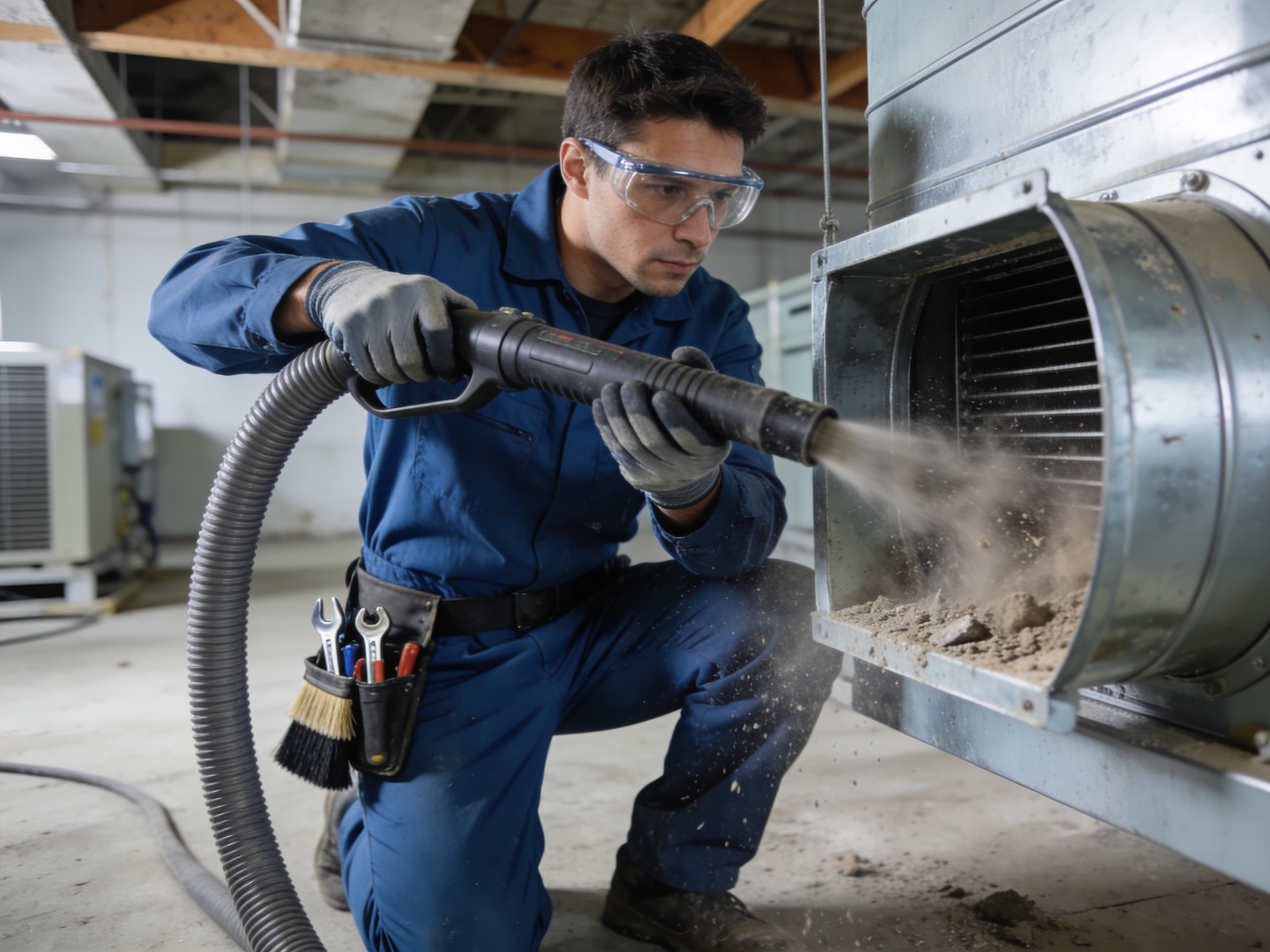
Lake Oswego homes built from the 1960s through 1990s often feature original galvanized duct runs routed through crawlspaces and attics where winter rains and high humidity allow dust, pollen, and mold to accumulate. Cleaning these systems requires removing registers, sealing the HVAC unit, and using negative-air machines with HEPA filtration so loosened debris does not re-enter living spaces. Technicians must also check for disconnected or crushed flex runs common in the area's hillside properties, because those hidden gaps reduce airflow long before homeowners notice uneven temperatures.
Oregon's mild but persistently wet winters mean condensation forms inside metal ducts when warm air meets cooler surfaces, creating conditions for microbial growth that standard filters cannot stop. A full cleaning includes brushing main trunks and branches, vacuuming at the source, and treating visible mold only after moisture sources are identified. Skipping the moisture step leads to rapid regrowth, especially in homes near Oswego Lake where groundwater seepage raises indoor humidity levels year-round.
Before any work begins, the system is inspected with a camera to map every accessible run and note any code violations such as missing mastic seals or uninsulated ducts in unconditioned spaces. This step prevents damage to fragile 1970s-era duct board and ensures the job meets current Oregon residential energy code requirements for sealing. Homeowners receive a written report with photos so they can see exactly what was removed and what areas remain inaccessible without major renovation.
Technician insight
In Oregon, the thing that catches most people out with HVAC duct cleaning is how quickly mold returns when ducts stay damp from our long rainy season, especially in Lake Oswego homes with original unsealed metal runs sitting in crawlspaces that never fully dry.
Crawlspace ducts in Lake Oswego
Homeowner noticed musty odors and uneven heating in a 1978 split-level near Oswego Lake. Inspection revealed heavy dust and mold on disconnected flex runs in the damp crawlspace. Crew sealed gaps, brushed and extracted debris under negative pressure, then treated visible growth after confirming moisture source. Odors disappeared and airflow improved without further issues.
How it works
- 1
Initial Inspection
Camera survey of all accessible ducts from the 5200 Meadows Rd base location, noting layout, material, and any moisture or disconnection issues typical in Lake Oswego crawlspaces.
- 2
System Isolation
Registers are removed and the HVAC unit is sealed with plastic and tape to create negative pressure before agitation begins.
- 3
Agitation and Extraction
Rotary brushes and compressed air tools dislodge debris while a truck-mounted vacuum pulls material out through the main trunk lines.
- 4
Final Verification
Post-clean camera inspection confirms removal of buildup and documents restored airflow before the system is returned to normal operation.
Pricing
Upfront quotes after inspection; cost varies with number of runs, access difficulty in crawlspaces, and any moisture remediation needed.