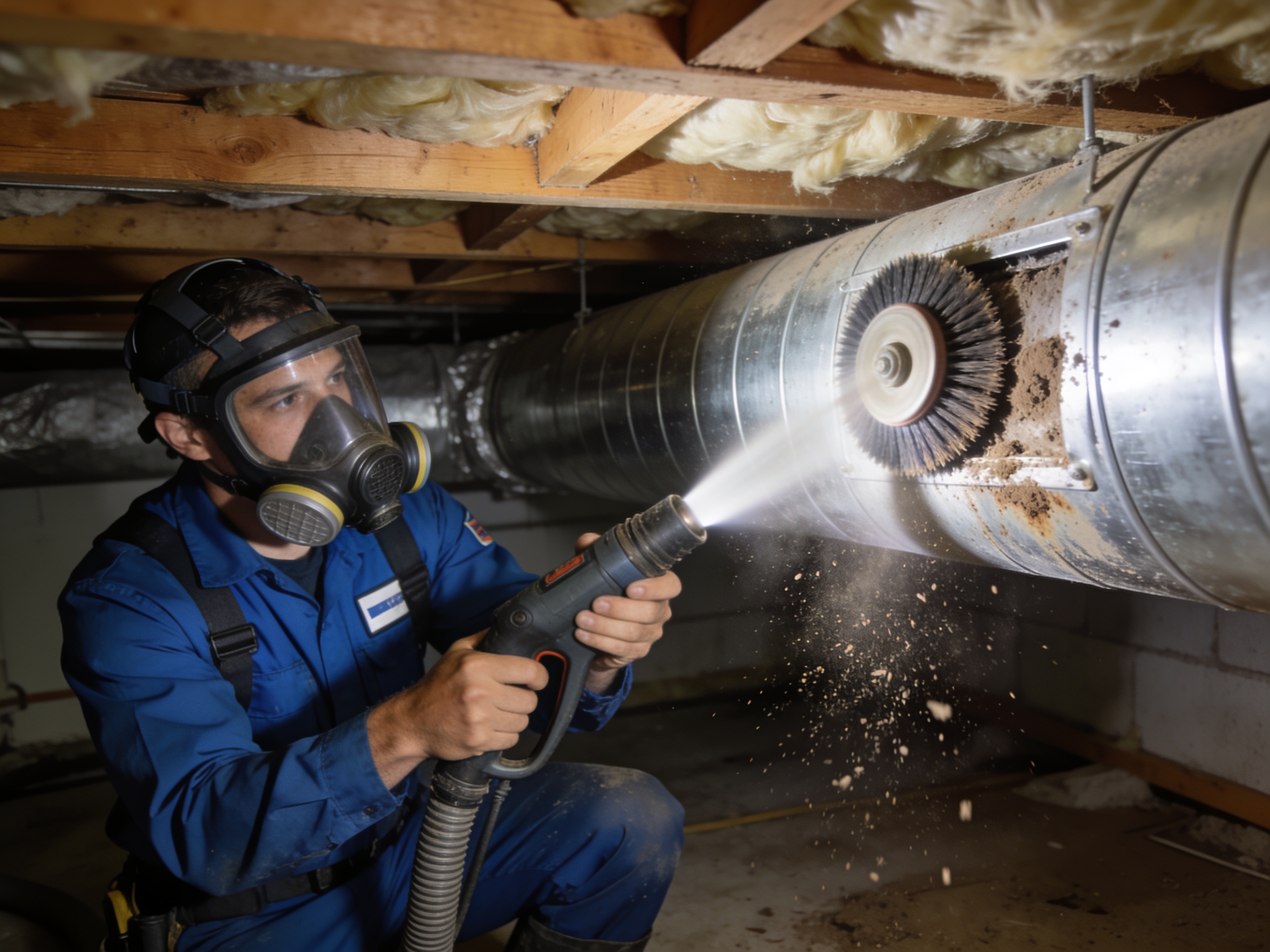
Lake Oswego homes built from the 1960s through 1990s often have galvanized or flex duct runs routed through crawl spaces and attics where winter rains drive humidity levels above 70 percent for months. This constant moisture combines with fine silt from the Willamette Valley to create sticky buildup on duct walls that standard furnace filters never catch. Professional cleaning uses negative-air machines and rotary brushes sized for 6- to 10-inch residential trunks, breaking the layer without tearing the older flex sections common in Clackamas County neighborhoods like Palisades and Westlake.
Pollen from Douglas fir and western red cedar peaks in spring and again in late summer, lodging deep in supply runs that serve second-floor bedrooms. Homeowners notice musty odors when the system first kicks on after a cool night. The service includes camera inspection before and after to document debris removal and confirm that registers in rooms facing Oswego Lake are fully cleared, preventing recirculation of allergens during the long shoulder seasons when windows stay closed.
Access panels are cut only where necessary and sealed to current Oregon Residential Specialty Code standards. Technicians check for disconnected joints near the air handler, a frequent issue in homes on the steeper lots around Lake Oswego where vibration from the unit loosens collars over time. Final steps include HEPA vacuuming of the furnace blower compartment and return plenum to stop the cycle of recontamination that occurs when only the main trunk is cleaned.
Technician insight
In Oregon the thing that catches most people out with professional air duct cleaning is how quickly winter rain soaks crawl-space insulation and then condenses inside the metal ducts every time the heat runs, especially on the older Lake Oswego lots where the original flex runs were never sealed at the joints.
Hidden Mold After Extended Wet Winter
A 1980s single-story home near Westlake Park had recurring musty smells each fall. Inspection showed water-stained flex duct in the crawl space where rain had saturated the vapor barrier. The crew removed the contaminated sections, cleaned the remaining trunk lines, and sealed all joints before reinstalling new insulation rated for the local moisture load.
How it works
- 1
Initial Camera Inspection
Technicians insert a scope through the return and supply openings to map duct layout, note any disconnected sections, and identify moisture stains common in Lake Oswego crawl spaces.
- 2
System Isolation and Protection
Furniture and flooring are covered, registers are sealed, and the furnace is isolated so debris does not enter living spaces during agitation.
- 3
Agitation and Negative-Air Extraction
Rotary brushes and compressed-air whips loosen debris while a truck-mounted vacuum maintains continuous negative pressure, pulling material out of the home.
- 4
Post-Clean Verification and Reassembly
A second camera pass confirms clearance, access panels are sealed, and the system is returned to normal operation with new filter installed.
Pricing
Pricing depends on total linear feet of duct, number of stories, and whether crawl-space or attic access is required; upfront written quotes provided before work begins.