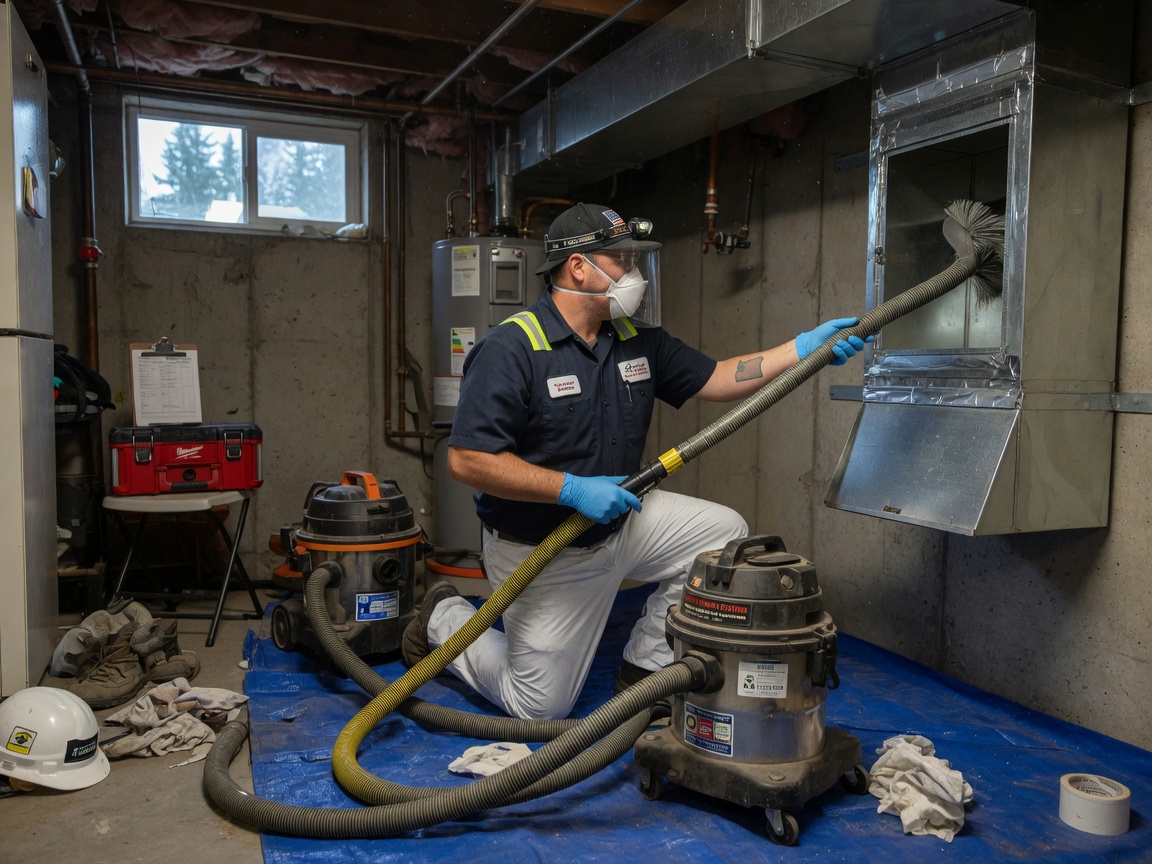
Lake Oswego homes built from the 1960s through the 1980s often feature original galvanized ductwork that runs through crawlspaces and attics exposed to the region's frequent winter rain and high humidity. Moisture can collect on metal surfaces, trapping pollen from nearby Douglas fir stands and fine dust blown in from the Willamette Valley. When these systems are cleaned, technicians must account for settled debris that has hardened over decades, using brushes sized for narrow rectangular runs common in split-level houses around Lakewood and First Addition neighborhoods.
Seasonal temperature swings between cold, wet winters and dry summers cause expansion and contraction in duct joints, creating small gaps that allow insulation fibers and outdoor allergens to enter the airstream. Cleaning crews working in these homes typically start at the farthest supply registers and work back to the furnace to prevent re-contamination. Access panels may need to be cut into finished ceilings in ranch-style homes near Oswego Lake, requiring careful patching afterward to match existing textures.
Terrain around Lake Oswego includes sloped lots where duct runs can sit partially below grade, increasing the chance of water intrusion during heavy storms. Crews check for standing water or past flooding signs before beginning negative-air machine setup. In two-story homes on hillsides, longer vertical risers require additional vacuum ports to maintain consistent airflow during the entire cleaning process.
Seasonal Considerations
Winter storms bring prolonged dampness that can promote mold on interior duct surfaces if left unaddressed. Summer brings higher pollen loads from surrounding tree cover, making spring cleanings especially useful before cooling season begins.
Technician insight
In Oregon, the thing that catches most people out with licensed and insured duct cleaners is how winter rain and high crawlspace humidity in Lake Oswego homes built before 1990 lets dust cake onto the bottom of horizontal runs. Homeowners often miss that those lower surfaces need extra passes with stiffer brushes because standard whips slide right over the hardened layer.
Crawlspace Ducts in a 1978 Split-Level
A Lake Oswego homeowner noticed reduced airflow after several wet winters. Inspection showed compacted dust and light corrosion on the lower walls of the main trunk running through the crawlspace. The crew used extended rotary brushes from multiple access points, then vacuumed the dislodged material before restoring full airflow.
How it works
- 1
Initial Walk-Through
Technician inspects all accessible registers, returns, and the furnace or air handler location while noting home age and duct material.
- 2
System Isolation
Registers are sealed and a negative-air machine is connected at the main trunk to contain debris during cleaning.
- 3
Mechanical Cleaning
Rotating brushes and compressed air tools dislodge buildup from supply and return runs, working from farthest points inward.
- 4
Post-Cleaning Inspection
Technician checks for remaining debris, verifies airflow, and removes all equipment and seals.
Pricing
Cost depends on number of stories, duct accessibility, and amount of buildup; homes in Lake Oswego with original 1970s ductwork often require more time than newer construction.