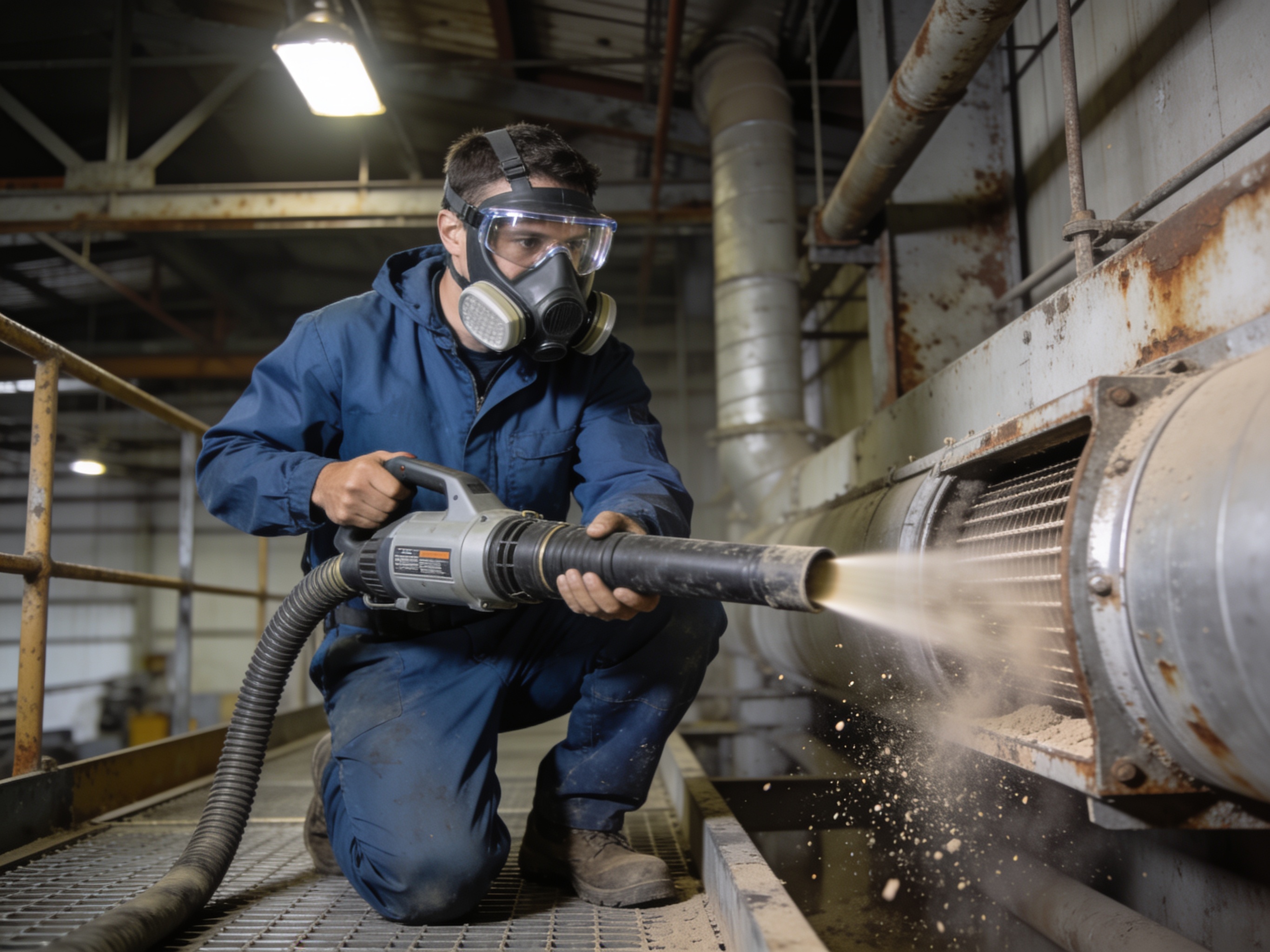
Industrial facilities around Lake Oswego often operate in older steel and concrete buildings where duct runs span multiple stories and connect to heavy machinery. Constant airflow from production lines carries metal shavings, chemical residues, and fine particulates that settle deep in elbows and transitions. Oregon's frequent rain and high humidity create condensation points inside uninsulated sections, allowing mold to form on accumulated debris. Technicians must use negative-air machines sized for high cubic feet per minute ratings and access panels cut at precise intervals to reach every branch without shutting down entire operations.
Access challenges multiply in Clackamas County warehouses where ducts run above racking systems or through crawl spaces with limited headroom. Removing years of buildup requires rotary brushes matched to duct diameter and HEPA-filtered vacuums to prevent cross-contamination into production areas. Technicians check for damaged insulation and loose joints that could violate local fire codes before sealing access points. Post-clean verification includes airflow measurements at multiple registers to confirm the system returns to design specifications rather than relying on visual inspection alone.
Seasonal temperature swings in the Portland metro area cause expansion and contraction in long duct runs, loosening seams that then collect more contaminants. Industrial clients request scheduled cleanings during low-production windows to avoid interrupting output. Proper containment with plastic sheeting and floor protection keeps debris from settling on finished goods or equipment below the work zone.
Technician insight
In Oregon, the thing that catches most people out with Industrial air duct cleaning is how quickly condensation from our long rainy season turns light dust into stubborn, moldy mats inside uninsulated trunk lines running through Lake Oswego warehouses.
Warehouse duct restoration
A manufacturing plant in Lake Oswego reported reduced airflow and musty odors during humid months. Inspection revealed thick layers of production dust mixed with moisture inside main trunks above the assembly floor. Crews installed temporary negative pressure, cut targeted access panels, and cleaned the full run before resealing. Airflow returned to normal and odor complaints stopped.
How it works
- 1
Site Assessment
Map all duct runs, note access points, and identify contaminants specific to the facility's operations.
- 2
Containment Setup
Isolate work zones with negative pressure and seal registers to prevent dust migration into occupied spaces.
- 3
Mechanical Cleaning
Run appropriate brushes and air whips through main trunks and branches while vacuuming at high CFM.
- 4
Final Verification
Measure airflow, inspect for remaining debris, and document condition before restoring full system operation.
Pricing
Cost depends on total linear footage, number of access points required, and whether the system runs during cleaning.