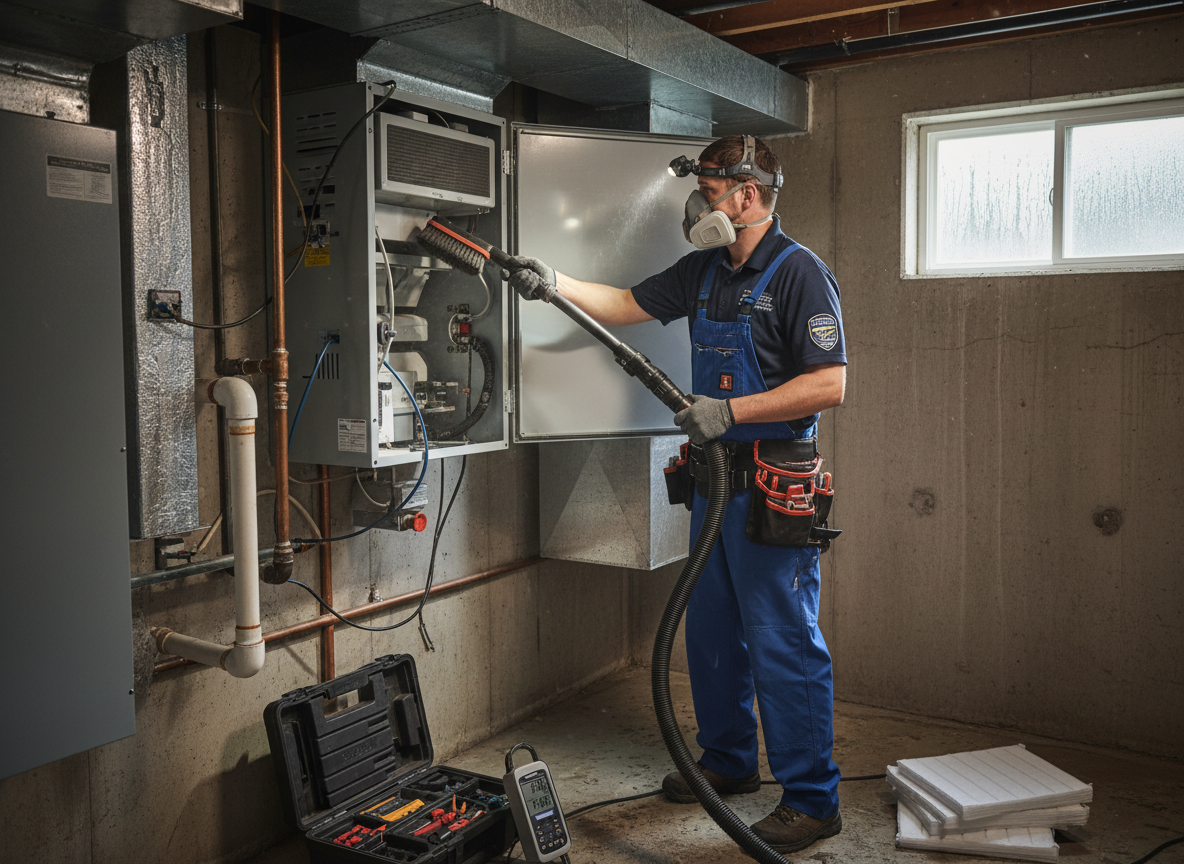
Oregon's frequent rain and mild winters push moisture into ductwork of homes built in the 1970s through 1990s across Lake Oswego and nearby areas. This creates conditions where pollen and fine dust collect on metal surfaces and insulation liners. Over time the buildup restricts airflow and recirculates particles that trigger respiratory issues. Proper cleaning requires removing access panels without damaging original duct seams and using brushes sized for the rectangular trunk lines typical in these neighborhoods.
Homes near the Willamette River often sit on slightly sloped lots where soil moisture migrates into crawlspaces and then into return ducts. Technicians must check for rusted joints and collapsed flex runs before any vacuuming begins. Skipping this step can push debris deeper into the system rather than extracting it. Equipment must handle the higher static pressure found in two-story Lake Oswego residences without disturbing ceiling registers.
Seasonal pollen loads from surrounding fir and maple trees settle inside supply ducts during spring and remain until disturbed by furnace cycles. A full service includes brushing main trunks, cleaning individual branch runs, and vacuuming at the furnace plenum. Technicians also inspect the evaporator coil surface because moisture there combines with dust to form a film that standard filter changes do not remove.
After cleaning, simple airflow measurements confirm the system moves air evenly again. Homeowners receive guidance on filter MERV ratings suited to Oregon's outdoor particle counts and advice on scheduling follow-up visits before the next heating season begins.
Technician insight
In Oregon, the thing that catches most people out with indoor air quality services is how winter rains drive moisture into crawlspace ducts in older Lake Oswego homes, creating hidden mold on liner surfaces that only shows up once you open the main trunk.
Moisture-Related Buildup in Lake Oswego Ducts
A homeowner noticed persistent musty odors when the furnace ran. Inspection revealed damp insulation in the return trunk fed from a crawlspace near the river. We removed the saturated liner sections, brushed the metal, and restored proper seals. Odors disappeared and airflow returned to normal.
How it works
- 1
Initial Assessment
Technician inspects accessible duct sections, registers, and the furnace plenum to identify visible debris and moisture signs.
- 2
Access Preparation
Panels are removed carefully and protective coverings placed to contain dust during cleaning.
- 3
Mechanical Cleaning
Rotary brushes and negative-air vacuum equipment remove buildup from trunk lines and branches without damaging liners.
- 4
System Verification
Airflow is checked at multiple points and the system is reassembled with new access seals where needed.
Pricing
Pricing determined after on-site inspection of duct layout and condition; upfront quote provided before work begins.