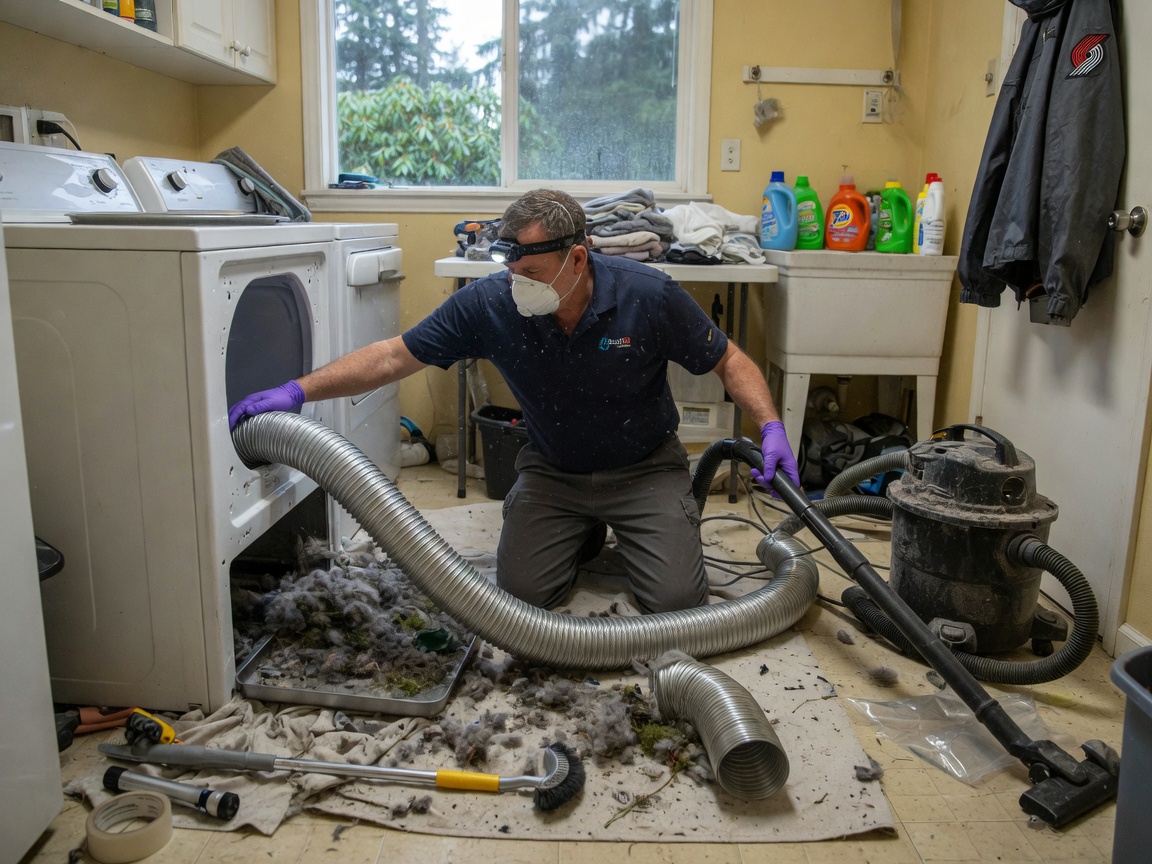
Lake Oswego homes built from the 1960s through the 1990s often feature extended dryer vent runs that snake through crawl spaces or along sloped lots common in the area. These longer paths collect lint faster when combined with the region's frequent rain and high humidity, which introduces moisture that turns loose lint into dense, hard-to-reach plugs. Standard vacuum attachments rarely reach the full length, leaving residue that restricts airflow and raises operating temperatures inside the dryer.
Homeowners in Westlake, Palisades, and nearby sections of Clackamas County frequently notice clothes taking multiple cycles to dry after several winters of use. Metal flex sections near the dryer connection can sag or crush over time, creating low spots where water pools and lint cakes. Cleaning requires removing the full run, brushing the interior walls, and verifying the exterior termination cap is clear of debris from nearby trees and seasonal wind.
We check for proper slope, secure all joints with metal clamps, and confirm the vent exits at least three feet from windows or doors per local building practices. In older Lake Oswego stock, we also watch for outdated plastic or foil accordion duct that should be replaced with rigid or semi-rigid metal to meet current safety expectations. Each job ends with a before-and-after airflow test so you can see the difference immediately.
Technician insight
In Oregon, the thing that catches most people out with dryer vent cleaning is how our wet winters push moisture into the line on longer runs found in Lake Oswego homes built on hillsides, turning lint into a concrete-like plug that standard shop-vac attachments never touch.
Extended Run in Palisades Home
A Lake Oswego homeowner reported clothes still damp after two cycles. We found a 28-foot vent with multiple low spots collecting water and lint. After brushing the full length and straightening the run, airflow returned to normal and drying times dropped by half.
How it works
- 1
Inspection
We examine the full vent path from dryer to exterior termination, noting length, material type, and any visible sags or blockages common in Lake Oswego crawl spaces.
- 2
Disconnect and Access
The dryer is pulled out safely and the vent is detached at both ends so we can run brushes and rods without damaging surrounding cabinetry or flooring.
- 3
Mechanical Cleaning
Rotating brushes and high-powered vacuum remove compacted lint along the entire run, paying special attention to low spots created by the area's sloped lots.
- 4
Reassembly and Test
We reinstall with proper clamps, replace any damaged sections, and run the dryer to confirm strong airflow and safe exhaust temperature.
Pricing
Cost depends on vent length, number of turns, and whether sections need replacement; most Lake Oswego jobs fall in a moderate range for residential properties.