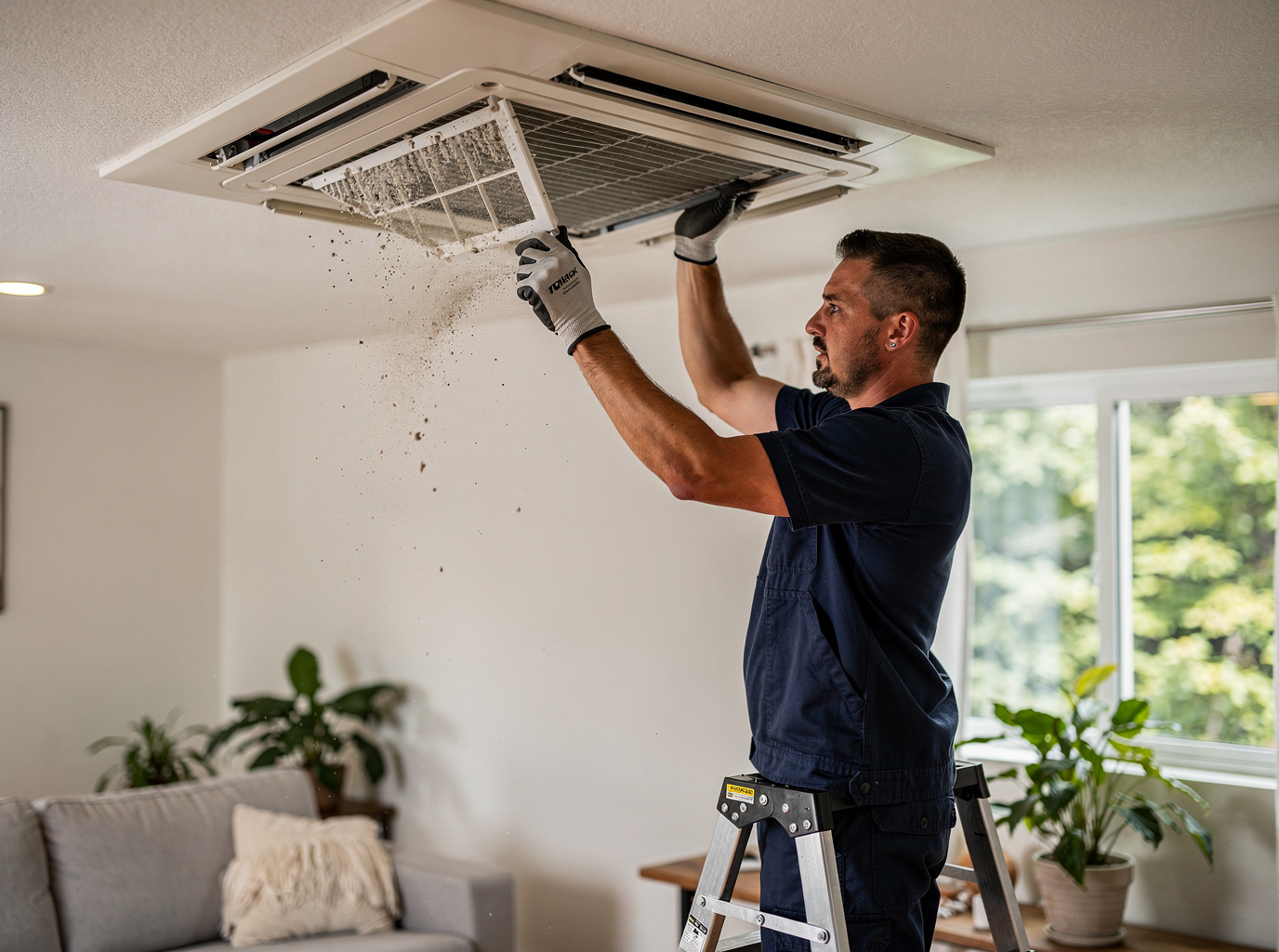
Lake Oswego homes often feature older ductwork tied into forced-air systems that collect pollen and fine dust during the long rainy season. AC cleaning service addresses this by accessing supply and return lines through existing registers without cutting into finished walls. Technicians use negative-pressure equipment to pull debris toward the vacuum while brushing interior surfaces, which prevents redistribution into living spaces.
Homes built before the 1990s in the Oregon area frequently have flexible duct sections that sag or compress over time, restricting airflow and trapping moisture. During cleaning, each run is inspected for these restrictions so crews can restore full diameter before sealing access points. This step matters because compressed ducts increase blower workload and can shorten equipment life in the damp climate.
Proper AC cleaning service also includes cleaning the evaporator coil and drain pan to remove the biofilm that forms when condensate sits during mild winters. Leaving residue allows mold spores to re-enter the airstream once cooling resumes. Crews finish by verifying static pressure readings match manufacturer specs so homeowners know the system is moving air efficiently again.
Technician insight
In Oregon, the thing that catches most people out with ac cleaning service is how quickly pollen and winter moisture combine inside ducts of Lake Oswego homes built on sloped lots where return lines run through unconditioned crawl spaces.
Musty Odor After Heavy Rains
A Lake Oswego homeowner reported a persistent smell from the vents following weeks of rain. Inspection showed standing water residue and compacted debris in the return duct under the crawl space. The team restored full airflow and eliminated the odor source without opening walls.
How it works
- 1
System Assessment
Technicians map every accessible duct run and note register locations while checking for visible mold or insulation damage.
- 2
Equipment Setup
Negative-air machines connect at the furnace or air handler and registers are sealed to create contained airflow paths.
- 3
Mechanical Cleaning
Rotary brushes and compressed air tools dislodge debris while the vacuum removes it from the property.
- 4
Coil and Drain Service
Evaporator coils receive a no-rinse cleaner and the condensate line is flushed to prevent future clogs.
- 5
Final Verification
Static pressure and airflow are measured at multiple points to confirm the system performs to original design.
Pricing
Upfront quotes after on-site inspection; price depends on number of runs, access difficulty, and coil condition.